8.3.12
West Cork has long been a home for exiles of all sorts. The ‘Irish Rivera’ is full of artists, writers, actors- creative, bohemian types that feel inspired by the sea, the good food, big old farmhouses and the empty landscape. Celebrities with bases in the area include Jeremy Paxman, David Puttnam and Jeremy Irons.
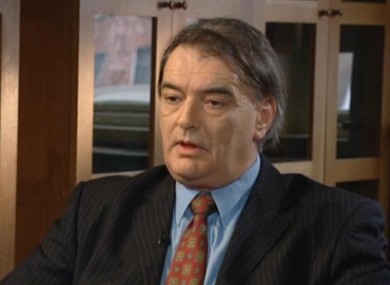 |
| Ian Bailey via thejournal.ie |
Less well-known ‘blow-ins’ have made West Cork their second home too. It’s a part of Ireland where Germans, Americans and Britons are as much a part of the community as the native Irish. Sixteen years ago, something happened in the small village of Schull which shot fear into the hearts of all of West Cork. It was an event that would end one life, and change another forever.
A French filmmaker, Sophie Toscan du Plantier, had fallen in love, like so many others, with the beautiful scenery and friendly people of West Cork. She and her husband, Daniel, had bought a holiday home high above the sea on the outskirts of Schull. It was isolated at the end of a tiny boreen. The glow from Fastnet Lighthouse shone through Sophie’s bedroom window. For two filmmakers like Daniel and Sophie, and her then-15 year old son Pierre, it would be hard to imagine a more perfect place to spend their holidays.
Ian Bailey was another blow-in to the village. A native of Manchester, he lived with his Welsh partner, Jules Thomas, not too far from Sophie Toscan-du Plantier. A journalist by trade, he had come to Cork in 1991, and just like Sophie, had fallen in love with it.
Unlike the graceful, elegantly French Ms du Plantier, Ian Bailey was noted in Schull for the wrong reasons. He threw himself into the Irish traditional music scene and wrote bad poetry; he gardened for the poet John Montague who described Bailey as “clumsy in his work”; constantly slashing himself accidentally with gardening tools. He roamed the roads late at night and even howled at the moon.
His diaries proved to be sensational when they were read in court during his libel trial in 2003. He wrote about the three occasions he assaulted Jules Thomas, in 1993, 1996 and 2003. She was so badly beaten her lip separated from her gum. He wrote: “I actually tried to kill her.” He shared his fantasies of orgies and violence. He wrote of his heavy drinking and drug use, and that he would never find redemption in this life.
But nowhere in his diaries did he write that he killed Sophie Toscan du Plantier.
Hers was the loneliest of deaths. She’d flown to Ireland for a short break to help her write a film script. The isolation and the desolately beautiful landscape was the perfect recipe for inspiration and productivity. Her son Pierre was staying with his father, Sophie’s first husband, in France. Her neighbours knew she was back in Cork- her body was discovered after local woman Shirley Foster spotted that a gate on the property was open- but the last record of the filmmaker is grainy CCTV footage from Cork Airport showing her walk up to the Avis rental desk. Sophie was due to fly back to France on Christmas Eve.
 |
| Sophie Toscan-du Plantier via rte.ie |
Only one (presumably) living person knows what happened that night. Sophie let someone into the house. The visit had been convivial- two wineglasses stood beside the sink to dry. But then it had gone very, very wrong.
When Shirley Foster spotted the open gate the next morning- Sophie had always been very particular about having it closed- she walked up to the house to tell her neighbour. Ms Foster was met with a horrific scene. Sophie Toscan du Plantier lay at the end of the path to her cottage, battered to death, her face unrecognisable. A trail of blood led from the house to where her body lay. The autopsy report made for such shocking reading, her parents couldn’t finish it.
Ireland was a different place in 1996. The Celtic Tiger was making its first roars, but one of its biggest boom industries-crime- was yet to emerge. It was still an Ireland that had hardly any serious crime outside the hotspots of Dublin. It was still an Ireland that didn’t have a proper motorway network- the journey from Cork to Dublin could take up to three hours, and the drive to Schull another two. The then-Justice Minister, Nora Owen, had ignored calls for a state pathologist to be stationed in Munster. Sophie lay where she died for a day until the State Pathologist, Dr John Harbinson, could do a forensic examination.
This delay undoubtedly cost the investigation. Sophie’s time of death could not be established as her corpse was too cold. Perhaps if more reliable forensic evidence had been gathered, Ian Bailey’s nightmare might have ended sixteen years ago.
He admitted himself that he was the chief suspect. For the gardai, he seemed to be the perfect fit. He was not a local. He had a history of violence against women- his assault of Jules Thomas had been brought to court. He was ‘creepy.’ He acted oddly around the village. He was seen at the murder scene, but he insisted that it was for his journalistic work- he freelanced for The Sunday Tribune. He was said to have been seen acting strangely on the night of December 22 by a woman named Marie Farrell- a woman who later withdrew her evidence.
Marie Farrell had her own reasons for being out that night, reasons that she didn’t want her husband to know about. She said she panicked and when the gardai produced Ian Bailey’s name, she agreed that she had seen him: “I just thought the guards know what they’re talking about, there’s no way they’d say it was Ian Bailey if it wasn’t. And I just thought, I’ll do what they’re saying and that’s the end of it for me.”
Ian Bailey’s journalistic black humour also worked against him. He told locals that he had “done the murder” i.e. covered it for the Tribune, but the meaning was lost. He deadpanned that he had “bashed her brains” in and washed his boots in the stream but his sarcasm was lost. Most concrete of all was Ian Bailey’s supposed admission to his neighbours, the Shellys, on New Year’s Eve 1998: “I did it, I did it, I went too far.”
Ian Bailey says he was repeating what he had been told by the gardai for 12 hours straight: “On the first occasion, there was no explanation of how or why, how I might have done this, or why I might have done this. All I had was 12 hours of total accusation, ‘You killed her, you did it, you did it, you did it’, and I had this repeated to me time and time again. There was no attempt to, as far as I can see, investigate.”
Now 54, Ian Bailey has spent the last 16 years fighting to clear his name. Amid the pictures of the UCC graduates in 2010, beside the smiling young faces, there was a familiar face in The Irish Examiner. There was Ian Bailey. Unable to get work, he threw himself into a law degree to prove his innocence.
The report by the DPP and the refusal to extradite him to France-and his decision to sue the state because of his treatment at the hands of the gardai- have cast doubt in the minds of even the most ardent believers in Ian Bailey’s guilt.
Daniel Toscan du Plantier died in 2003 without ever seeing his wife’s killer punished. He knew the dangers of blaming Ian Bailey. “I criticise them [the gardai] for throwing out his name with such incredible recklessness. Because if there is one chance in a hundred that he is innocent, it is terrifying.”

No comments:
Post a Comment